 Featured
Remedy
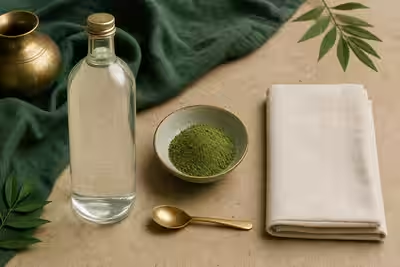
Ruqyah Water Preparation Kit
عدة الرقيةThis kit contains everything you need to prepare ruqyah water at home, correctly and sa…
$26.00USD
Order
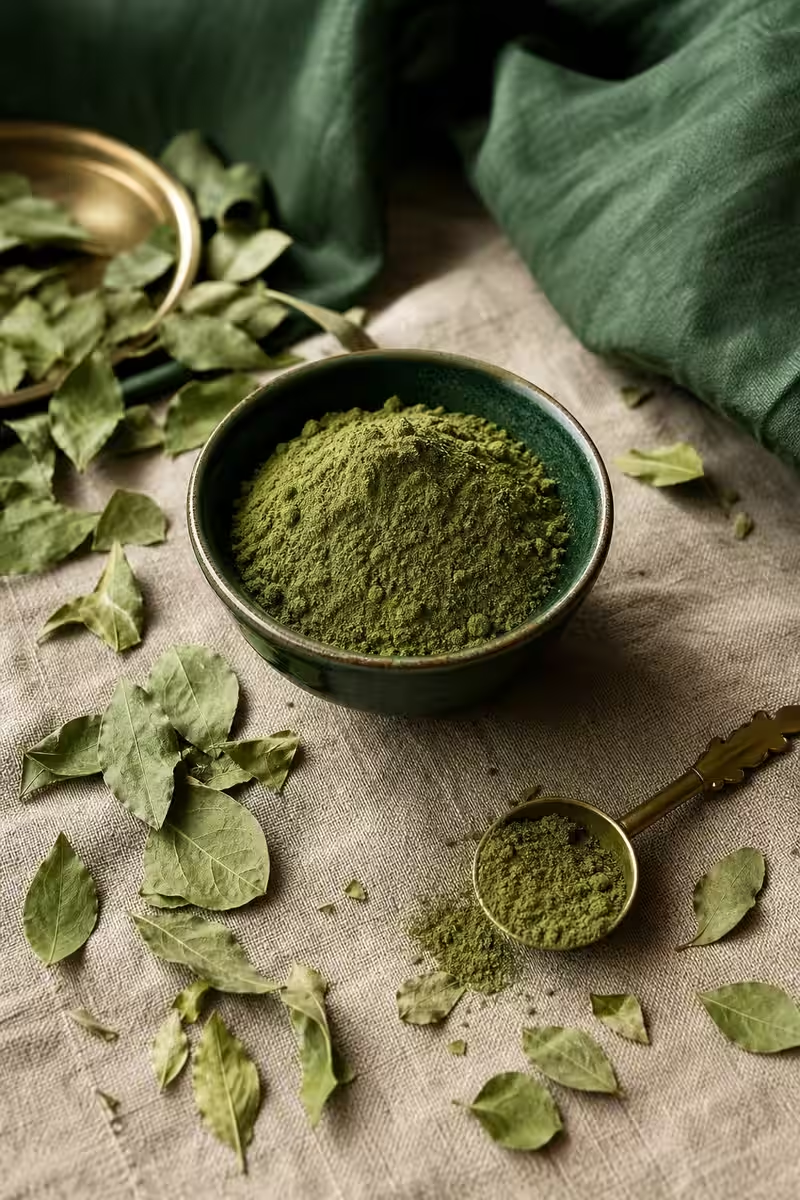
Sidr is the lote tree of the Qur'an, and its dried, ground leaves have been used for washing and purification in Muslim households for centuries. The Prophet ﷺ instructed that the deceased be washed with water and sidr, and the leaves have long served as a natural cleanser for hair and skin because they contain saponins that lather slightly and leave no residue.
This is pure dried sidr leaf, milled fine, with nothing added — no fragrance, no colour, no filler.
Traditional uses: a paste washed through the hair for cleansing and dandruff; a handful stirred into bath water; a supply kept at home for washing the deceased; and sidr water for ruqyah, following the method the scholars describe, in which ground sidr is added to water, Qur'an is recited over it, and it is drunk and used for washing.
To prepare, stir the powder into warm water, let it stand, and use the liquid. Patch-test first, keep it out of the eyes, and do not swallow the paste in quantity.
One pack. Sidr is a traditional cleansing herb, not a medicine, and ruqyah must always be with the words of Allah alone.
Before requesting an order, read ordering, delivery and returns and our privacy policy.
Delivery availability, charges and estimated timing are confirmed by the team before your order is accepted.
The team will confirm suitable packaging and delivery arrangements for your order.
Your order-request reference is displayed after submission. The team will confirm dispatch and any available tracking details with you.
Sidr leaf powder is one of the most quietly important items in a Muslim household, and one of the least understood outside it. It is simply the dried leaf of the lote tree, ground to a powder — a green-grey, faintly herbal-smelling flour that turns water slightly slippery and foams a little when stirred. That behaviour is because the leaves contain natural saponins, the same class of compounds that make soapwort and soapnuts clean. Before commercial shampoo existed, this is what millions of people washed with.
The sidr appears in the Qur'an several times, and always with honour. In Surah Saba it is part of the description of a land changed by ingratitude (34:16). In Surah al-Waqi'ah the people of the right hand are described as being “among lote trees without thorns” (56:28) — the sidr of paradise, without the thorns that make the worldly tree difficult to harvest. And in Surah al-Najm, at the climax of the Mi'raj, the Prophet ﷺ is “by the lote tree of the furthest boundary” (53:14) — sidrat al-muntaha, beyond which none may pass.
A tree named in the description of Paradise, and standing at the boundary of the unseen, is not treated as an ordinary plant in Muslim culture. Its leaves, its fruit (the nabq) and its wood have all been used, and the tree is still planted around homes and villages across Arabia, Yemen and the Horn of Africa for shade and for its fruit.
When the daughter of the Prophet ﷺ died, he said to the women washing her: “Wash her three times, or five, or more than that if you think it necessary, with water and sidr, and put camphor — or a little camphor — in the last washing.” (Sahih al-Bukhari and Sahih Muslim)
This is the origin of the practice. Water and sidr is the traditional washing mixture for the deceased, and the same combination has been used for the living: for ghusl, for washing the hair, for cleaning the body when water alone was thought insufficient. The scholars explain that sidr cleans and that its scent is mild and pleasant, and that camphor in the final washing cools and preserves.
Because of this narration, sidr leaf has an established place in Islamic ritual practice, not merely in folk medicine. Many families keep a bag of it at home for exactly this reason — so that if a death occurs, the washing can be done properly.
There is a well-known practice, described by Imam Ibn Hajar al-Asqalani in Fath al-Bari and reported from earlier scholars, for a person afflicted by sihr (magic). It is a scholarly practice, not a prophetic hadith, and it is important to be honest about that distinction. The method as commonly transmitted:
This is the practice behind what is sold as “ruqyah sidr water,” and it is why our ruqyah water kit and this powder are bought together. A few things must be said clearly about it:
Hair wash. Mix two to four tablespoons of powder with warm water into a loose paste, let it stand ten minutes, work it through wet hair and scalp, leave five to ten minutes, then rinse thoroughly. It cleans without stripping oil, and it is a traditional treatment for dandruff and an itchy scalp. Rinsing takes longer than shampoo — be patient, and follow with a little conditioner on the ends if your hair feels dry.
Body wash and bath. A handful stirred into bath water, or a paste used on the skin in place of soap. Traditional across Arabia and the Gulf, and gentle enough for most skin.
Before ghusl or after illness. Many families wash with sidr water on occasions where a thorough, respectful cleanse is wanted.
For the deceased. As the hadith instructs — water and sidr. Keep a supply at home for this.
Skin paste. Applied briefly to oily or irritated skin and rinsed off. Patch-test first; some skins react to any botanical.
Pure dried sidr leaf, milled to a fine powder. Nothing added — no perfume, no colour, no other herbs, no filler. The colour of a genuine batch is a dull green-grey to olive, and it smells faintly of dry leaves and hay. Powder that is vividly green has been dyed or is a different leaf; powder that smells strongly perfumed has had fragrance added, which you do not want on your scalp or in your ruqyah water.
Keep the pack sealed, dry and away from light. Dried leaf powder is stable for a long time; moisture is what ruins it, causing clumping, discolouration and eventually mould. If it gets damp, discard it. Store it somewhere you will remember when a death in the family makes it urgently needed.
People sometimes ask how sidr differs from rhassoul (ghassoul) clay, soapnut, or shikakai. Rhassoul is a mineral clay from Morocco: it absorbs oil and adds body, but it contains no saponins, so it does not lather, and it can be drying on some hair. Soapnut and shikakai are plant materials rich in saponins, like sidr, and behave similarly in the hair. Sidr's particular qualities are its mildness, its very faint pleasant smell, its fine green-grey colour, and above all its established place in the sunnah — it is the leaf the Prophet ﷺ named for washing, which no clay or imported pod can claim.
In practice many people use sidr for the scalp and hair and a clay for the body, or simply keep sidr because one bag does everything: hair, skin, bath, and the washing of a deceased family member when the moment comes. That last reason alone is why we recommend keeping a sealed pack in the house at all times.
Is this the same sidr as in the Qur'an? Yes — the lote tree, Ziziphus species.
Do I need seven leaves? Seven green leaves is the number in the transmitted method. With powder, people typically use a small handful or two to three tablespoons. The number is not a condition of validity.
Can I use it on coloured or treated hair? Sidr does not deposit colour the way henna does, but as with any botanical, test on a hidden strand first if your hair is chemically treated or very light.
Can I mix it with henna? Yes, traditionally — sidr is sometimes added to henna mixes.
Is it halal to sell and use? Yes. It is a plant, used for cleanliness and for a practice the scholars describe.
Does it cure magic? Only Allah cures. Ruqyah with His words is the prescribed means, and sidr water is the method the scholars transmitted. Persist with prayer, Qur'an, du'a and removing every object of shirk from the home — and be careful of anyone selling certainty.
Sidr teaches something about the Islamic approach to purity: cleanliness is not only a legal condition, it is an act of worship with a material and a spiritual side. A leaf from a tree named in Paradise, ground into water, used to wash a body before it meets its Lord — that is a religion in which the physical and the unseen are never separated.
May Allah purify you outwardly and inwardly, protect your household from every harm, and accept your recitation. Amin.
You may also need
Featured
This kit contains everything you need to prepare ruqyah water at home, correctly and sa…
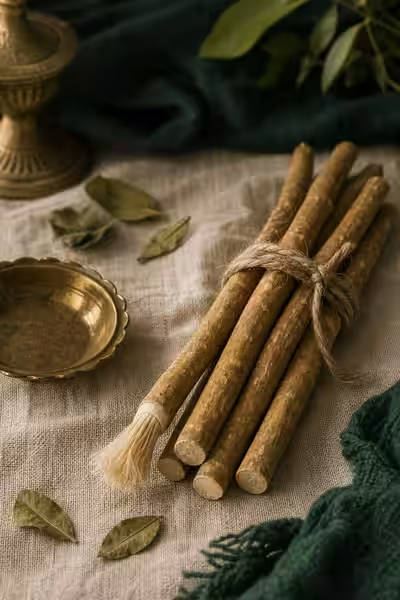
The miswak — siwak — is a teeth-cleaning stick cut from the arak tree (Salvadora persic…
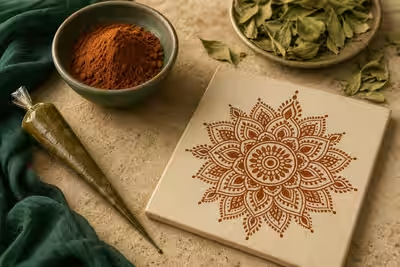
Pure Yemeni henna — finely sifted Lawsonia inermis leaf powder, with no additives, no m…
Essential storage keeps the site working. Optional Google services stay off until you choose. Rejecting them does not limit access.
Privacy policy · Cookies & Google data use. Change choices in the footer anytime. Withdrawal may reload the page; save unsent form text first.
Your browser’s Global Privacy Control signal is enabled. Advertising remains off.
WELCOME TO
A LITTLE GUIDANCE, A CLICK AWAY
Explore our services, find a product, or get in touch with the team.
Chat on WhatsAppContinue with the team on WhatsApp↗The guide answers automatically. The admin team can also reply here; response times may vary.
Share your details once, then return to your saved chats.
Website guide active · Team replies may also appear here.
Saved for the admin team ·