 Featured
Remedy
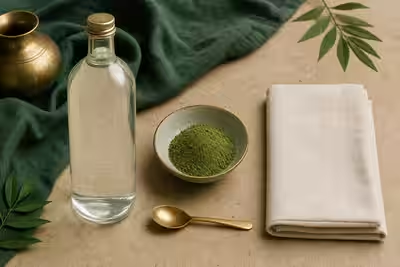
Ruqyah Water Preparation Kit
عدة الرقيةThis kit contains everything you need to prepare ruqyah water at home, correctly and sa…
$26.00USD
Order
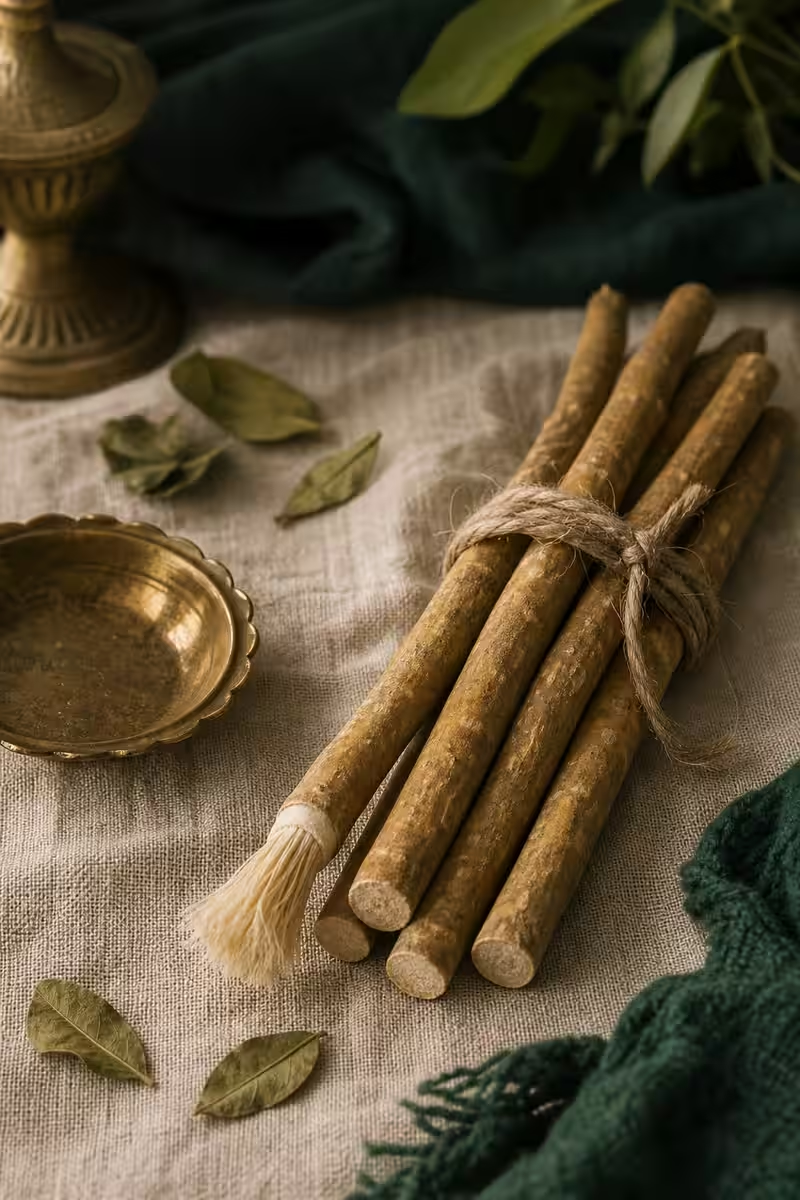
The miswak — siwak — is a teeth-cleaning stick cut from the arak tree (Salvadora persica), the oral hygiene tool the Prophet ﷺ used daily and urged upon his ummah. He said that were it not difficult for his people, he would have commanded them to use the siwak at every prayer.
This is a pack of five natural arak sticks, cut, cleaned and sealed. No chemicals, no flavouring, no plastic.
To prepare: peel about a centimetre of bark from one end, chew the exposed wood gently until the fibres separate into soft bristles, then brush teeth, gums and tongue with light strokes. When the bristles fray or lose their taste, cut them off and prepare a fresh tip.
Keep the working tip dry between uses in a ventilated holder — never sealed wet. The taste is naturally peppery and slightly salty, from the plant's own compounds.
Sunnah times: before prayer, on waking, before reciting Qur'an, on entering the home, after eating, and whenever the mouth's taste changes.
One pack of five. The siwak complements brushing; it does not replace treatment for dental disease.
Before requesting an order, read ordering, delivery and returns and our privacy policy.
Delivery availability, charges and estimated timing are confirmed by the team before your order is accepted.
The team will confirm suitable packaging and delivery arrangements for your order.
Your order-request reference is displayed after submission. The team will confirm dispatch and any available tracking details with you.
The miswak is the oldest continuously used toothbrush in the world, and it is one of the few sunnah practices that a Muslim can perform dozens of times a day with almost no cost. A stick, a knife, thirty seconds of chewing — and an act that the Prophet ﷺ described as pleasing to Allah.
“Were it not that it would be too difficult for my ummah, I would have commanded them to use the siwak at every prayer.” (Sahih al-Bukhari and Sahih Muslim)
“The siwak is a means of purifying the mouth and pleasing the Lord.” (Reported by Ahmad and al-Nasa'i)
The first hadith tells you how strongly the Prophet ﷺ valued it: he refrained from making it obligatory only out of mercy, so that it would remain a voluntary act of love rather than a burden. The second tells you why: it is both physical cleanliness and worship at the same time. That combination — a hygienic act counted as devotion — is characteristic of this religion.
The sahabah used the siwak constantly. Narrations describe the Prophet ﷺ using it on waking in the night, before each prayer, on entering his home, and even in his final illness. He asked for a siwak shortly before he died, and it is reported that he cleaned his teeth with it more thoroughly than ever on that last day.
The preferred wood is arak — Salvadora persica — a shrub or small tree native to Arabia, the Middle East and parts of Africa and South Asia. Its twigs are straight, fine-grained and mildly fibrous, and they separate cleanly into bristles when chewed. Other woods are used regionally — olive, neem, and others — and are permissible, but arak is what the classical sources refer to and what we supply.
Arak has a distinctive taste: peppery, slightly pungent, faintly salty and astringent. That flavour comes from the plant's own chemistry, which includes natural antibacterial compounds, silica and mineral salts. Modern research has examined Salvadora persica extensively and found real antimicrobial and anti-plaque activity — which is why you will find arak extracts in some commercial toothpastes. None of this surprises a Muslim; it simply confirms what the sunnah taught fourteen centuries ago.
They are not rivals. The honest guidance is: use the siwak as the sunnah practice throughout the day — before prayers, on waking, after meals — and keep brushing with a toothbrush and fluoride toothpaste twice daily, because that is what modern dentistry shows prevents decay effectively. The sunnah does not ask you to abandon a beneficial tool; it gives you another one. Many Muslims use both and find that the siwak's sharp taste also refreshes the mouth far better than a mint sweet.
If you have braces, implants, crowns, receding gums or active gum disease, be gentle and ask your dentist how to clean around your specific work. The siwak is abrasive, and abrasion on already-sensitive roots can cause problems.
Because a miswak is a consumable, not a possession. One stick lasts a few days of regular use. A pack of five is roughly two to three weeks for one person, which is enough to build the habit, or to keep one in the car, one at work, one in the prayer bag and one at home. It is also a good size to share: handing a fresh siwak to a friend before Jumu'ah is a small sunnah that people remember.
Because the siwak is an act of worship and not only a hygiene routine, the scholars mention a few courtesies. Hold the stick in the right hand. Begin on the right side of the mouth, following the general sunnah of starting with the right in matters of honour. Do not use it while walking ostentatiously or in a way that shows off — it is a private act between you and your Lord, and the sahabah used it discreetly before prayer. Do not leave a used stick lying where people will step on it or where it will collect dust; rinse it, dry it and put it in its place. And do not use a stick that has fallen into filth or that shows mould — cut a fresh tip or take a new stick.
There is also an etiquette about the mouth itself. The purpose of cleaning before prayer and before recitation is to stand before Allah in a state of physical and spiritual freshness. That is why the jurists recommended it so strongly for the one who has eaten something with a strong smell, for the one who has just woken, and for the one who is about to enter the mosque and sit among people.
The siwak is the most travel-friendly sunnah there is: no liquid, no battery, no restriction at an airport. Keep one in the car, one in your work bag, one in your prayer bag and one by the bed. A stick that has been peeled and used should not be sealed in an airtight tube while damp — that is how mould starts — so either carry it in a ventilated wooden or cloth holder, or carry a fresh sealed stick and prepare the tip when you arrive. For long journeys, carry two or three unpeeled sticks; they weigh nothing and they keep indefinitely in a dry bag.
If you are giving siwak to children or to a masjid, buy the multipack and hand them out before Jumu'ah. It is a small gift with an enormous weight of reward attached to it, because you are helping someone revive a sunnah they will then perform five times a day.
Does it replace toothpaste? For sunnah use through the day, yes; for decay prevention, dentistry recommends fluoride toothpaste twice daily as well. Use both.
Is it safe for children? Yes with supervision — teach them not to chew and swallow large pieces, and cut the tip for them until they can manage it.
Will it whiten teeth? It removes surface stains mechanically and people do report brighter teeth, but it will not change intrinsic colour. Do not scrub harder to chase that.
Is it permitted while fasting? The majority of scholars permit it throughout the fast.
How long does one stick last? One to three days of regular use, depending on how often you cut a fresh tip.
Can I use another wood? Yes, other woods are used and are permissible. Arak is the preferred and traditional choice.
My gums bleed when I start. Some bleeding in the first days is common as gums adjust, particularly if they are inflamed. Use lighter strokes. If bleeding continues beyond a week or two, see a dentist — that is usually a sign of gum disease that needs attention.
Consider what the siwak actually is: a piece of wood, cleaned and chewed by your own hand, used before you stand in front of your Lord. It costs almost nothing, it needs no electricity or factory, and the Prophet ﷺ wanted it so much for his ummah that only mercy stopped him from making it obligatory. Reviving it takes a minute a day.
May Allah make your mouth a place of remembrance, accept your prayers, and reward you for every sunnah you keep alive in your house. Amin.
You may also need
Featured
This kit contains everything you need to prepare ruqyah water at home, correctly and sa…
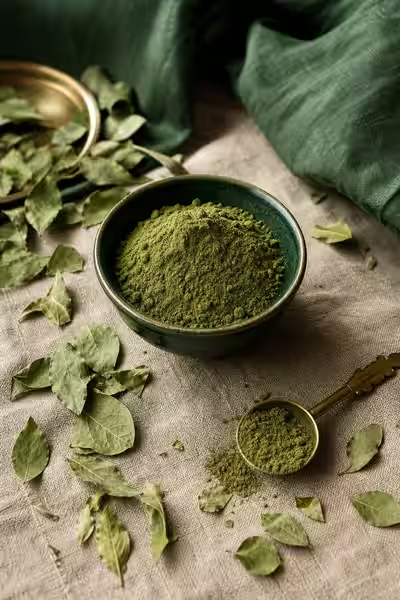
Sidr is the lote tree of the Qur'an, and its dried, ground leaves have been used for wa…
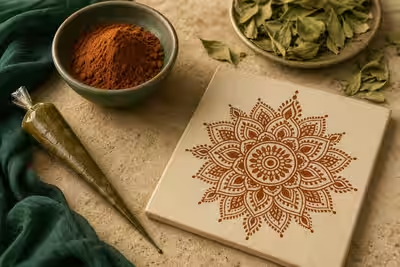
Pure Yemeni henna — finely sifted Lawsonia inermis leaf powder, with no additives, no m…
Essential storage keeps the site working. Optional Google services stay off until you choose. Rejecting them does not limit access.
Privacy policy · Cookies & Google data use. Change choices in the footer anytime. Withdrawal may reload the page; save unsent form text first.
Your browser’s Global Privacy Control signal is enabled. Advertising remains off.
WELCOME TO
A LITTLE GUIDANCE, A CLICK AWAY
Explore our services, find a product, or get in touch with the team.
Chat on WhatsAppContinue with the team on WhatsApp↗The guide answers automatically. The admin team can also reply here; response times may vary.
Share your details once, then return to your saved chats.
Website guide active · Team replies may also appear here.
Saved for the admin team ·