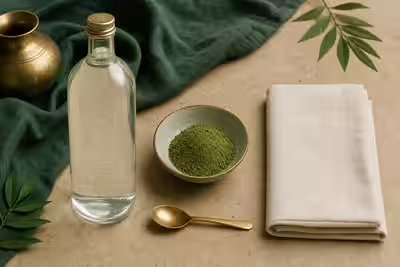
 Featured
Remedy
Ruqyah Water Preparation Kit
عدة الرقيةThis kit contains everything you need to prepare ruqyah water at home, correctly and sa…
$26.00USD
Order
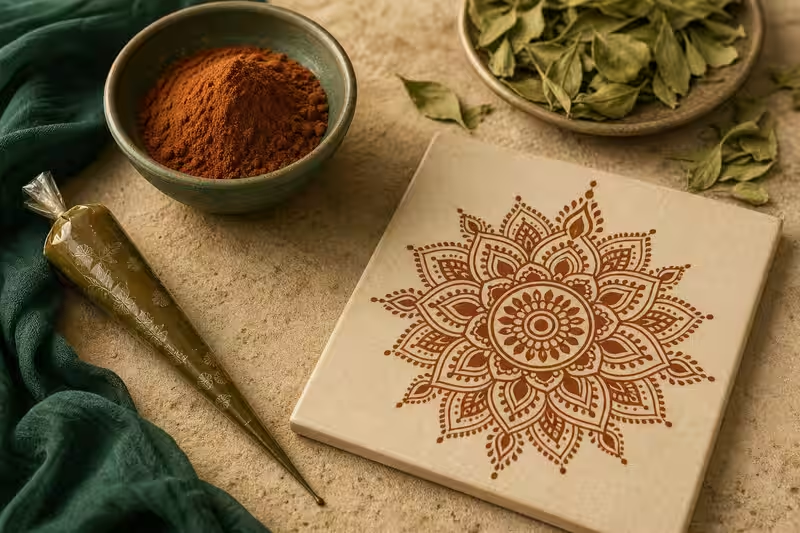
Pure Yemeni henna — finely sifted Lawsonia inermis leaf powder, with no additives, no metallic salts, no fragrance and, above all, no PPD. 150g.
Yemeni henna is prized for its fine grind and its high lawsone content, which produces a deep, rich stain that develops from orange to burgundy-brown over 24 to 48 hours.
The Prophet ﷺ said that the best things with which grey hair is dyed are henna and katam, and henna has been used across the Muslim world for hair, beards, hands and feet for as long as there have been Muslims.
Mix with warm water into a yoghurt-thick paste, rest it, apply to clean hair or skin, wrap, leave one to four hours, then rinse without shampoo. The stain darkens over the following two days.
Important: never buy “black henna” — it contains PPD, which causes severe allergic reactions and permanent scarring. Patch-test first. Henna is not for infants, and people with G6PD deficiency should avoid it.
One 150g pack.
Before requesting an order, read ordering, delivery and returns and our privacy policy.
Delivery availability, charges and estimated timing are confirmed by the team before your order is accepted.
The team will confirm suitable packaging and delivery arrangements for your order.
Your order-request reference is displayed after submission. The team will confirm dispatch and any available tracking details with you.
Henna is the oldest cosmetic in continuous use in the Muslim world, and it is also one of the few that the Prophet ﷺ specifically recommended by name. It dyes hair and skin with a colour no synthetic product quite matches, it conditions as it stains, and it costs almost nothing. The only difficulty is that the market is full of adulterated product that can genuinely injure people — which is why the first thing to say about this pack is what is not in it.
Pure Lawsonia inermis leaf powder, 150g, finely sifted. Nothing added: no PPD, no metallic salts, no sodium picramate, no artificial dye, no fragrance, no sand or flour filler. Yemeni henna is traditionally regarded as among the finest available — a very fine sift and a high concentration of lawsone, the dye molecule, which produces a strong, deep, long-lasting stain.
Genuine henna powder is green — a soft khaki-green to olive — and smells of dried leaves, hay, or, to many people, distinctly of grass or spinach. It is not brown, not black, and it does not smell perfumed. If a powder is dark brown or black and promises an immediate black stain, it is not pure henna.
“The best things with which you change grey hair are henna and katam.” (Reported by Abu Dawud and al-Tirmidhi)
Katam is a second plant, mixed with henna to darken the result towards brown-black without the harshness of pure henna's orange. The sahabah dyed their hair and beards with henna, and narrations describe the companions recognised by the colour of their beards. Henna was also used for the hands and feet, for cooling the skin in heat, and traditionally for brides.
It is worth being accurate here, because so much is claimed for henna: the narrations specifically about applying henna to wounds and headaches are mostly graded weak by the scholars. The well-established evidence is for dyeing grey hair, and the practice of adorning the hands is a long, uncontroversial cultural tradition across the Muslim world — for Eid, for weddings, and for celebration. You do not need a weak hadith to justify a beautiful practice; it is enough that it is permissible and that the Prophet ﷺ praised it for the hair.
Lawsone binds to keratin — the protein in your hair and in the outer layer of your skin — and stains it permanently until that keratin grows out or wears away. That is why henna is not a coating or a film: it is a genuine dye bond. On hair it adds body and a slight stiffness, covers grey completely with repeated applications, and gives an auburn-to-burgundy result on dark hair and a strong orange-red on white or very light hair. On skin, the stain starts bright orange, deepens over 24 to 48 hours to a reddish-brown, and lasts one to three weeks depending on the location and how often that skin is washed.
Henna is also mildly cooling and astringent on the skin, which is why it has always been used on hands and feet in hot climates.
Mix a smaller amount to a thicker, toothpaste-like consistency, rest it, then apply in the pattern you want. Keep the paste moist and warm for as long as possible — wrapping it, or sealing it with a sugar-lemon mixture, helps. Leave at least two hours, ideally four or more, then scrape or flick the dried paste off rather than washing it. Avoid water on the area for the rest of the day. The stain will be orange at first and will deepen over two days; oiling it (olive, coconut, or a balm) protects and darkens it.
Pure henna gives red, auburn and burgundy tones. It cannot produce black. The traditional way to darken is katam, or a two-step process: henna first, then indigo over it, which gives brown to black. Both are plant materials with a long history of safe use. What you should never use is a product that claims black in one step in twenty minutes — that is a chemical dye, and in the case of “black henna” it is PPD.
So-called black henna is not henna. It is henna adulterated with para-phenylenediamine, an industrial dye, in quantities far above what is permitted even in regulated hair dyes. It stains fast and black, which is why street vendors and some salons use it for temporary tattoos. It also causes severe allergic contact dermatitis: blistering, weeping, intense swelling, permanent scarring and pigment loss, and in some cases a lifelong sensitisation that means the person can never again use any hair dye containing PPD — which includes most boxed dyes. Children are frequently the victims, at beaches and festivals.
The rule is simple: if a product promises a black stain quickly, do not put it on your skin. Real henna takes hours and gives red-brown. We sell real henna and we will never sell you anything else.
Seal the pack tightly and keep it cool, dark and dry. For long storage, the freezer is ideal — henna keeps its dye strength for a year or more frozen, whereas a bag left open in a hot cupboard loses potency within months. Once mixed with water, use the paste the same day; a mixed paste that has sat for a day or two has released its dye and will stain weakly.
Will it turn my hair orange? On white or very light hair, yes — strongly at first, deepening over days. On dark hair it gives auburn highlights in sunlight. A second application, or henna followed by indigo, deepens it.
Does it cover grey? Yes, usually with two applications. Grey takes henna brightly, so the first pass can look stark.
Is it safe on a beard? Yes — dyeing the beard with henna is the sunnah practice the hadith describes.
How long does the skin stain last? One to three weeks; longest on palms and soles, shortest where skin is washed often.
Can I use it if I have eczema or psoriasis? Not on affected, broken or inflamed skin. Patch-test elsewhere first and ask your dermatologist.
Is 150g enough? For one full head application on medium-length hair, yes, with a little left over; for a long thick head of hair, plan on two packs.
Can men use it? Yes — for hair and beard. It is the recommended way to cover grey.
Henna is what celebration looks like in most of the Muslim world: the night before a wedding, the morning of Eid, a father's beard going from grey to red over a Friday afternoon. It is slow, messy, communal and completely free of the chemicals that the modern alternative depends on. Mix the paste, sit with your family while it sets, and let it do what it has done for a thousand years.
May Allah beautify you inwardly and outwardly, bless your celebrations, and keep you and your children from every harm. Amin.
You may also need
Featured
This kit contains everything you need to prepare ruqyah water at home, correctly and sa…
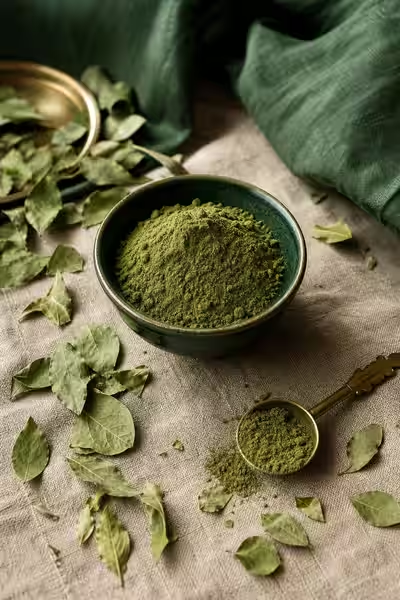
Sidr is the lote tree of the Qur'an, and its dried, ground leaves have been used for wa…
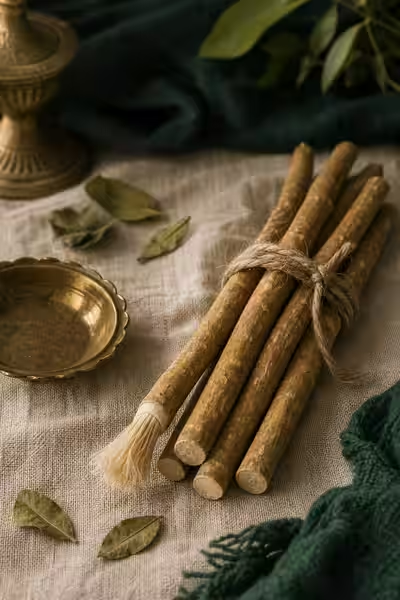
The miswak — siwak — is a teeth-cleaning stick cut from the arak tree (Salvadora persic…
Essential storage keeps the site working. Optional Google services stay off until you choose. Rejecting them does not limit access.
Privacy policy · Cookies & Google data use. Change choices in the footer anytime. Withdrawal may reload the page; save unsent form text first.
Your browser’s Global Privacy Control signal is enabled. Advertising remains off.
WELCOME TO
A LITTLE GUIDANCE, A CLICK AWAY
Explore our services, find a product, or get in touch with the team.
Chat on WhatsAppContinue with the team on WhatsApp↗The guide answers automatically. The admin team can also reply here; response times may vary.
Share your details once, then return to your saved chats.
Website guide active · Team replies may also appear here.
Saved for the admin team ·