Published by Shekie Mutumba · Editorial & corrections policy · Health information disclaimer
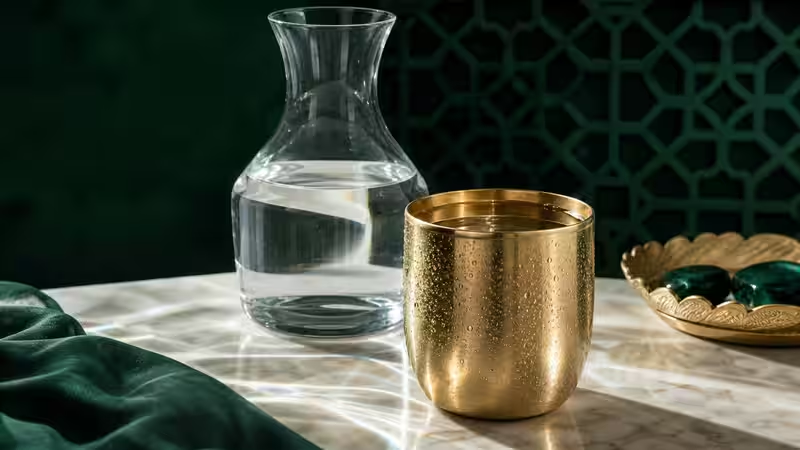
“It is blessed; it is food that satisfies.” A spring that began with an infant’s heel and a mother’s running feet, and has never stopped giving. Here is how to drink it as the Sunnah drinks it.
Every pilgrim returns with it: a jerrycan, a bottle, a small cup kept for the sick. Zamzam is the only water on earth with a biography — a story of a mother, an infant, an angel and a heel — and with hadith that name it blessed. And like every blessed thing, it is surrounded on one side by neglect and on the other by superstition and profiteering. This article tells its story, gives its texts, teaches its adab, and names what it is not.
The story of the well
In the valley that would one day hold the Ka‘bah, Hājar was left with her infant Ismā‘īl by the command of Allah, with no water and no company. When the child cried with thirst she ran between Ṣafā and Marwah seven times — the run that millions re-enact in sa‘y — and returned to find the earth at her son’s heel bursting with water. She gathered it, saying zam zam, “gather, gather,” and the spring took its name from her hands. The Prophet ﷺ said: “May Allah bestow His mercy on Umm Ismā‘īl; had she left the spring alone — or had she not gathered from it — Zamzam would have been a flowing stream” (al-Bukhārī). The water we drink is therefore older than the Ka‘bah’s rebuilding, older than every empire that rose in Makkah, and it has never dried.
The texts that name its blessing
The Messenger of Allah ﷺ said of it: “It is blessed; it is food that satisfies” (Muslim), and in another narration: “…and a healing for sickness” (reported by al-Bazzār and others; the wording of healing is carried in narrations the muhaddithūn grade between sound and good). And the hadith the ummah lives by: “The water of Zamzam is for whatever it is drunk for” (Ibn Mājah, Aḥmad; graded sound by a number of the scholars of hadith). He himself drank from it and had it brought to him away from Makkah: ‘Ā’ishah reported that she would carry Zamzam in vessels for the sick and pour it over them (at-Tirmidhī), and the Companions brought it from Makkah as a gift of the Haram.
“For whatever it is drunk for”: the hadith of intention
This single sentence makes Zamzam unique among waters: its benefit is tied to the intention of the drinker. Drink it for healing and you have asked Allah for healing through a water He blessed; drink it for provision, for knowledge, for a calm heart, for the thirst of the Hereafter — and the same water carries the same asking. The scholars drew from it a rule of the heart: Zamzam is a du‘ā you can hold. Which is why the Salaf drank it slowly, seated, with a named need in the chest — never gulped like tap water, never wasted, never sold by the sip at a shrine’s gate.
The adab of drinking it
- Sit, and begin with Bismillāh. As with all drinking in the Sunnah: seated, in three breaths, beginning with the name of Allah and ending with praise.
- Make the du‘ā of Ibn ‘Abbās. Allāhumma innī as’aluka ‘ilman nāfi‘an, wa rizqan wāsi‘an, wa shifā’an min kulli dā’ — O Allah, I ask You for beneficial knowledge, abundant provision, and healing from every disease — the du‘ā the Companion made over the cup, and the one I make over every cup I hand a patient.
- Drink to satisfaction. The hadith call it a food that satisfies; the Salaf drank until full, treating it as nourishment, not as a taste.
- Face the qiblah where you can, and do not waste it. Not a drop for washing floors, not a drop for show; the water of Hājar’s anxiety deserves better hands.
Zamzam in ruqyah and in the house of the sick
Because the water carries the du‘ā, the Salaf recited over it: al-Fātiḥah, Āyat al-Kursī, the quls, blown into the cup or the bottle, then given to the sick to drink and to wipe with. ‘Ā’ishah’s carrying of it to the sick shows the practice at its source. In my own practice Zamzam is the first cup I offer: recited over, given with its du‘ā, and followed always by the reminder that the water is honoured and the Healer is Allah — and by the question of what the doctor has said, because Zamzam accompanies the clinic and never replaces it.
What Zamzam is not
Three abuses must be named, because they trade on the water’s blessing. First, it is not a charm: bottled, buried, hung on a doorway or worn in a vial, it has left the Sunnah and entered superstition; Zamzam is drunk and shared, not displayed. Second, it is not a business of fear: the “Zamzam” sold at pilgrim prices in unmarked bottles is, in a great part of the world market, ordinary water or blended tap supply — the buyer who pays a fortune for an unverified jug has financed deception, not blessing. Buy from trusted pilgrims and verified suppliers, or accept a gifted cup with thanks; the barakah is not in the price. Third, it is not a substitute for treatment: the same Prophet ﷺ who called it a healing ordered medicine, and a believer who swaps insulin for Zamzam has not honoured the water, he has tested his Lord.
Sharing it: the sunnah of the cup passed on
The loveliest adab of Zamzam is that it is never kept to oneself. The pilgrim’s container empties into the cups of neighbours, the mosque’s cooler, the bedside of the sick, the hands of a child learning its du‘ā. Give a cup to the one you visit in hospital; keep a bottle in the house for the night someone falls ill; teach the children the du‘ā of Ibn ‘Abbās before they can read. A water that began as a mercy for one crying infant was never meant to end in one private fridge.
Carrying it home: the pilgrim’s adab
The pilgrim who fills a container at the Haram carries more than water; he carries a trust. Three adabs govern the journey home. First, take only what you will use and share — the coolers of the Haram are replenished for millions, and hoarding a hundred litres while a neighbour’s cup stays empty inverts the water’s meaning. Second, carry it with respect: sealed, clean, labelled, kept from the boot’s heat where you can; the water that Hājar gathered by hand deserves better than a leaking jerrycan among the tyres. Third, begin the sharing before the unpacking: the first cup from a returned pilgrim’s container belongs to the sick, the second to the mother next door, the third to the child who will learn its du‘ā. The Salaf treated a gift of Zamzam as a small ‘umrah arriving in a bottle — received with thanks, passed on with joy, and never, ever priced.
The spring today: guarded like a trust
It is worth knowing, for the heart’s reassurance, that the well of Zamzam is among the most carefully guarded springs on earth: its chamber maintained, its water tested continuously, its distribution organised so that the pilgrim’s cup and the tanker to the Haram run from the same protected source. The scientists who monitor it and the attendants who clean its chamber are, whether they name it so or not, servants of Hājar’s spring — and the believer who drinks from a verified supply drinks with both barakah and safety, which is exactly how the Sunnah wants its blessings: honoured in the heart and handled with sense. Where a supply cannot be verified, the adab is simple: accept the gifted cup, skip the suspicious bargain, and remember that the blessing was never contingent on the label.
Drink it tonight as du‘ā
So sit with your cup, name your need — healing, provision, knowledge, a settled heart — say Bismillāh, drink to satisfaction, and end with alhamdulillah. The spring is still running where Hājar ran, and the hadith still stands over every cup: it is for whatever it is drunk for. Drink, then, for what your heart most needs, and let the water of the Haram carry the asking to the One who made the earth burst for a mother’s sake.
One last adab, and perhaps the dearest: name the water to your children. Tell them of Hājar running, of the heel and the spring, of the Prophet ﷺ drinking from it and sending for it across the desert — so that the cup they hold at eight years old is already a story they love, and the story they love is already a du‘ā they know by heart.
And when the container runs low, do not mourn it as a possession ending but as a trust passing on: send the last cup to a sick neighbour, rinse the cup with gratitude rather than waste, and make the du‘ā of the Companion over an ordinary glass of water tonight — for the Lord of Zamzam hears the asking of a thirsty heart in any land, and the spring He opened for a mother’s sake was only the first of His mercies named after water.
Allāhumma innī as’aluka ‘ilman nāfi‘an, wa rizqan wāsi‘an, wa shifā’an min kulli dā’.