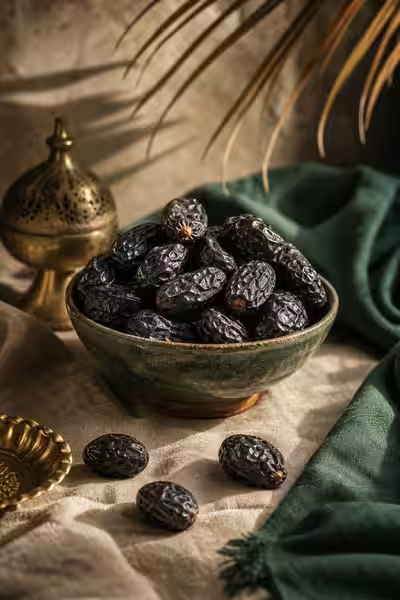
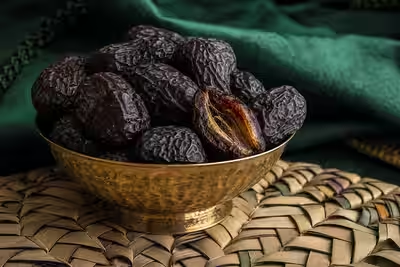
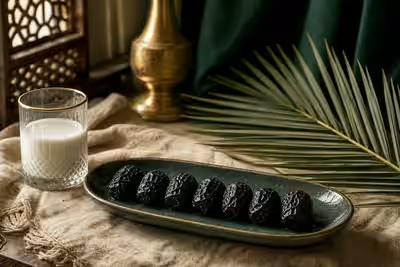
 Featured
Remedy
Ajwa Dates from Madinah
تمر العجوةAjwa are the dark, soft, finely wrinkled dates grown in Madinah — the variety the Proph…
$32.00USD
Order
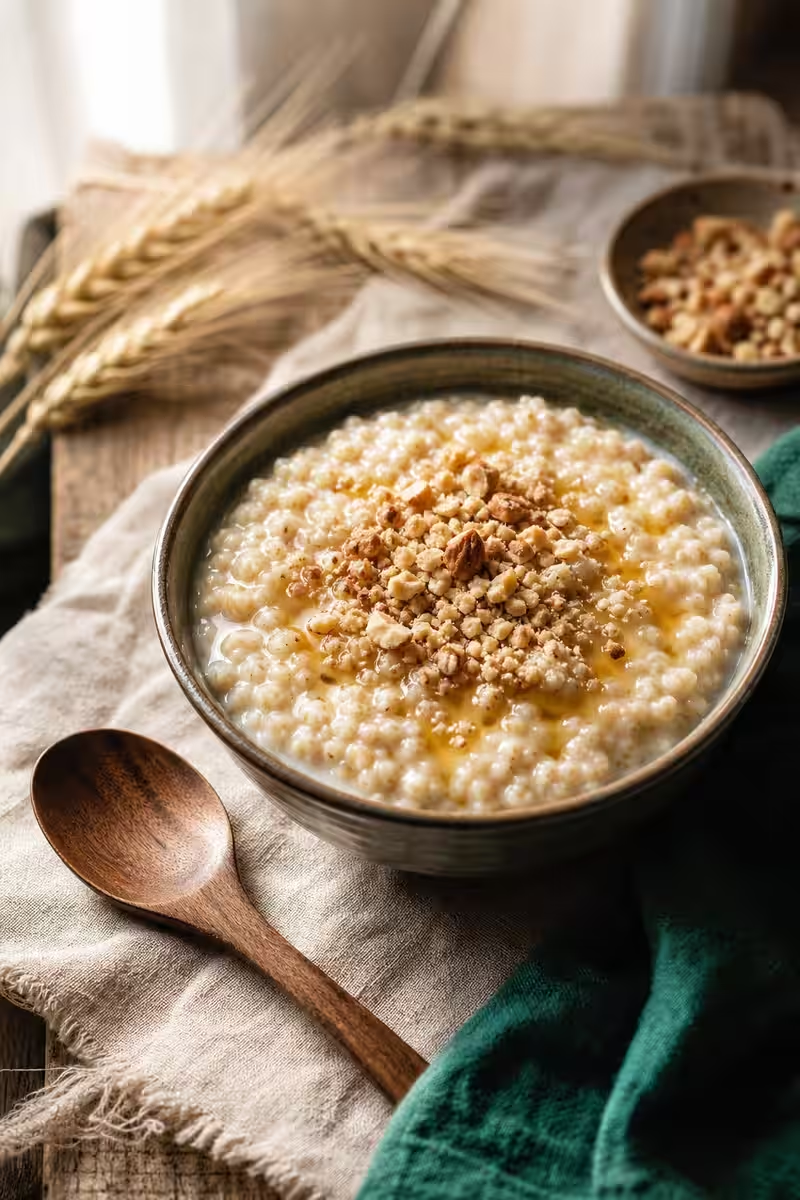
Talbinah is the thin barley porridge that 'Aishah (may Allah be pleased with her) ordered for the sick and for the grieving, and about which she reported the Prophet ﷺ saying that it rests the heart of the patient and takes away some of the sorrow.
It is made from whole barley — stone-ground barley flour cooked slowly with water or milk until it becomes a smooth, pale, drinkable porridge. The name comes from its milk-like colour and thinness.
This is pure whole-grain barley flour, nothing added, ready to cook in about ten minutes: two tablespoons stirred into a cup of water or milk, simmered gently, sweetened with honey.
People make it for a family member who is unwell, for a mother after childbirth, for someone whose appetite has gone, for an upset stomach, and — as the sunnah specifically describes — for a household in grief.
Barley contains gluten, so it is not suitable for anyone with coeliac disease. Store the pack sealed, cool and dry.
This listing is for one pack. Talbinah is a nourishing food, not a medicine; it supports recovery and comfort, and it does not replace treatment.
Before requesting an order, read ordering, delivery and returns and our privacy policy.
Delivery availability, charges and estimated timing are confirmed by the team before your order is accepted.
The team will confirm suitable packaging and delivery arrangements for your order.
Your order-request reference is displayed after submission. The team will confirm dispatch and any available tracking details with you.
Talbinah is the gentlest thing in the Prophetic medicine tradition, and possibly the most moving. It is not a strong bitter root or a potent oil. It is a bowl of thin barley porridge — the food you make for someone who is too sad or too ill to eat properly — and it comes to us through a narration about grief.
'Aishah (may Allah be pleased with her) said: “The Messenger of Allah ﷺ said: ‘The talbinah gives rest to the heart of the patient and takes away some of the sorrow.’” (Sahih al-Bukhari and Sahih Muslim)
In the same collection we learn how she acted on it. When a member of her family died, and the women of the household gathered and then dispersed, she would order that talbinah be made, and that a dish of tharid — bread soaked in broth — be prepared with the talbinah poured over it. Then she would say: “Eat from it, for I heard the Messenger of Allah ﷺ say…” And she would tell the grieving person to eat, because it comforts the heart.
She also ordered it for the sick. So the practice the ummah inherited has two clear occasions: bereavement, and illness.
The word comes from laban, milk — because the finished dish is pale, thin and milky in appearance. Classically it is made from whole barley: either barley grains cooked until they break down, or barley flour stirred into water or milk and simmered until it thickens slightly. It is served warm, thin enough to drink or spoon easily, and sweetened with honey.
Barley is one of the oldest cultivated grains in the world and was a staple across the ancient Near East. It is more fibrous than wheat, lower on the glycaemic index, and rich in beta-glucans — the soluble fibre that gives cooked barley its slightly silky texture and that modern nutrition research associates with cholesterol and blood-sugar effects. It also contains gluten, which matters for some people.
There is a plain physical logic here that the scholars have noted for centuries. A person in acute grief often cannot eat: appetite shuts down, the stomach feels knotted, chewing and digesting a normal meal is unappealing. A person recovering from illness has the same problem. What both need is something warm, soft, easy to swallow, gentle on the stomach, and nutritious enough to matter — and something that another person made for them and set in front of them.
Talbinah is exactly that. It is also an act of care: the sunnah of talbinah is not only a recipe, it is an instruction to the household to feed the grieving person rather than leave them to fast through their sorrow. 'Aishah's practice — cooking it, then telling the women to eat — is a lesson in how a Muslim home responds to death. Nobody sits with an empty stomach. Nobody is left alone with their grief and no food.
The basic method (one serving)
Variations the tradition and the kitchen both allow
If you are making talbinah for a bereaved family rather than for yourself, cook in quantity — a death brings neighbours, relatives and readers to the house, and the family are always the last people to eat. A practical amount: twelve tablespoons of barley flour to six cups of liquid serves six generously, and it doubles easily. Cook it thin, because it thickens as it cools and again on reheating, and keep a jug of warm milk or water beside the pot. Sweeten lightly with honey and set out bowls with dates and bread so that people can make the tharid 'Aishah described. Then do the part that actually matters: put a bowl in the hands of the person who has not eaten, and sit with them while they finish it.
Pure whole-grain barley flour — stone-ground or milled from the whole grain, including the bran, so that the fibre and the beta-glucans remain. Nothing added: no sugar, no milk powder, no flavouring, no wheat filler. It should smell faintly sweet and grainy, and its colour should be a soft cream-grey rather than stark white, which would indicate a refined product.
If you prefer to cook from the whole grain rather than the flour, barley grains (pearl or, better, whole hulled barley) work too — they simply need soaking and forty minutes or more of simmering until they break down. Flour is the practical choice for a sick household at ten in the evening.
Keep the pack sealed in a cool, dry, dark place. Whole-grain flours contain the germ's oils and can go rancid in heat over months, so in a hot climate it is worth keeping the bag in the fridge or freezer once opened, and buying in quantities you will use within a few months. If the flour smells sour, paint-like or distinctly off, discard it. Watch for pantry moths and weevils in warm humid kitchens — an airtight container solves this.
Is talbinah just porridge? It is a thin, pale barley porridge, closer to a drinkable gruel than to a thick breakfast porridge.
Flour or whole grain? Both are valid. Flour is quicker and easier for a sick household; whole grain is more traditional and needs longer cooking.
Must it be sweet? No. 'Aishah served it savoury, over bread and broth.
How often can I have it? Daily if you like. It is food.
Can I make a big batch? Yes — it keeps two to three days refrigerated and thins with a little water or milk when reheated.
Does it really help with grief? Ask anyone who has been fed by their community in the week after a death. The nourishment is real and the care is realer.
Is it suitable for suhur? Yes, and many families use it exactly that way in Ramadan.
There is a profound tenderness in the fact that the remedy the Prophet ﷺ recommended for sorrow was a bowl of warm food, cooked by someone else, eaten in company. Not a pill, not a chant, not something you had to be given by a special person — barley, milk, honey, and a household that refuses to let you grieve on an empty stomach. If someone in your family dies this year, make it. If someone you know is grieving, make it for them and take it round.
May Allah ease every sorrow in your home, restore health to your sick, and feed you from the tables of Paradise. Amin.
You may also need
Featured
Ajwa are the dark, soft, finely wrinkled dates grown in Madinah — the variety the Proph…


 Featured
Sidr honey comes from bees that feed on the flowers of the lote tree, and the finest is…
Essential storage keeps the site working. Optional Google services stay off until you choose. Rejecting them does not limit access.
Privacy policy · Cookies & Google data use. Change choices in the footer anytime. Withdrawal may reload the page; save unsent form text first.
Your browser’s Global Privacy Control signal is enabled. Advertising remains off.
WELCOME TO
A LITTLE GUIDANCE, A CLICK AWAY
Explore our services, find a product, or get in touch with the team.
Chat on WhatsAppContinue with the team on WhatsApp↗The guide answers automatically. The admin team can also reply here; response times may vary.
Share your details once, then return to your saved chats.
Website guide active · Team replies may also appear here.
Saved for the admin team ·