 Featured
Remedy
Ajwa Dates from Madinah
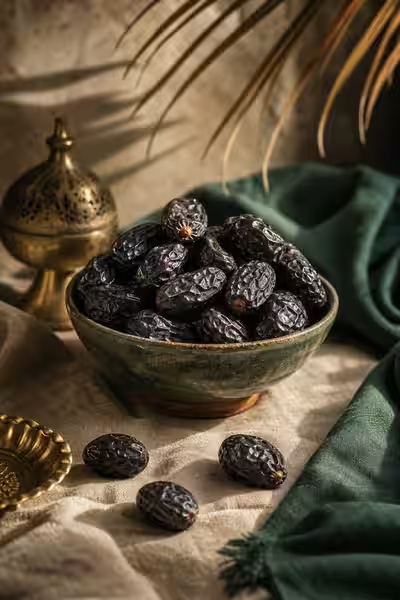
تمر العجوةAjwa are the dark, soft, finely wrinkled dates grown in Madinah — the variety the Proph…
$32.00USD
Order
 1 / 3
1 / 3
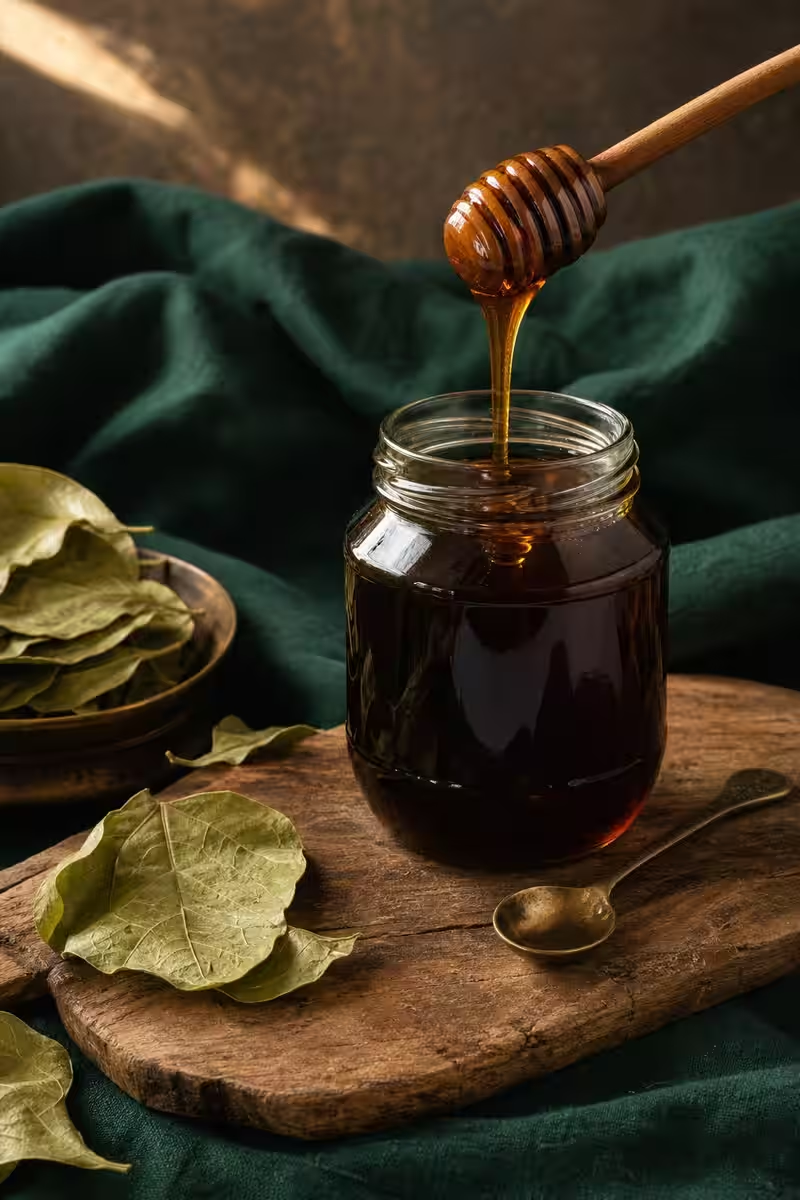
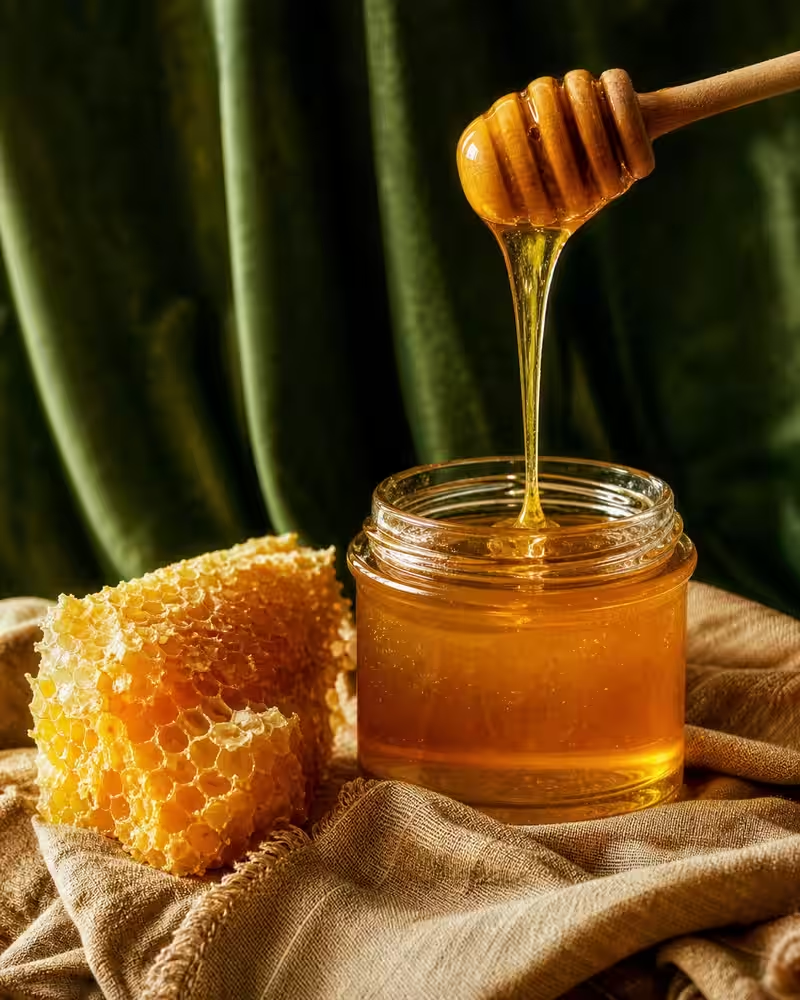
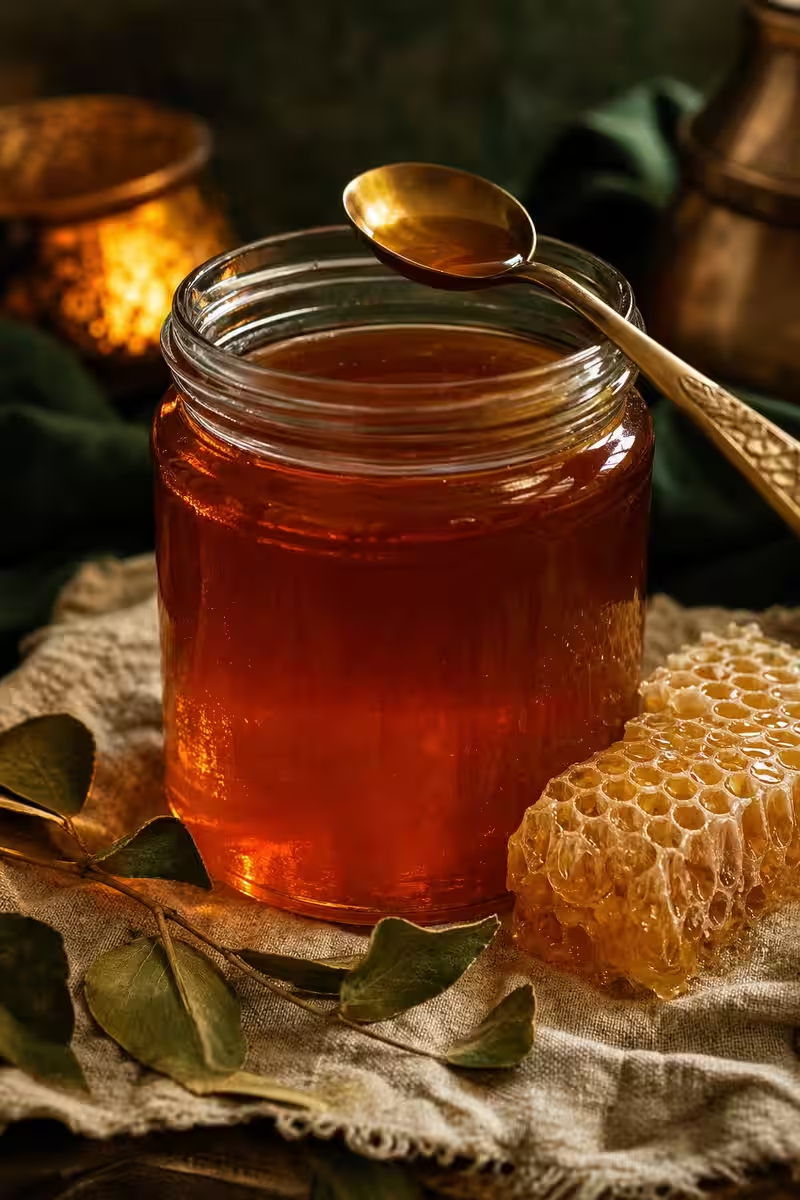
Sidr honey comes from bees that feed on the flowers of the lote tree, and the finest is gathered in the valleys of Hadramawt in Yemen, where the trees grow wild on dry hillsides and beekeepers still move hives by hand from valley to valley.
It is darker, thicker and more aromatic than ordinary honey, with a caramel and herbal depth and a long, faintly bitter finish. Because the sidr flowers for only a few weeks a year and the yield per hive is small, genuine sidr is among the rarest honeys in the world — and one of the most imitated.
Allah describes honey in the Qur'an as a drink, varying in colours, in which there is healing for people; and the Prophet ﷺ told a man whose brother had a stomach complaint to give him honey.
Take a spoon in the morning, stir it into warm water or milk, combine it with black seed, or use it in place of sugar. Keep the jar sealed at room temperature — never refrigerate, never boil.
One jar. Honey is a food and a traditional remedy, not a medicine, and must never be given to infants under one year old.
Before requesting an order, read ordering, delivery and returns and our privacy policy.
Delivery availability, charges and estimated timing are confirmed by the team before your order is accepted.
The team will confirm suitable packaging and delivery arrangements for your order.
Your order-request reference is displayed after submission. The team will confirm dispatch and any available tracking details with you.
Sidr honey is what people mean when they say “the best honey in the world.” It is not a brand and it is not a style of processing — it is honey made from the nectar of one tree, the sidr or lote tree, gathered in the places where that tree still grows wild in quantity: the Hadramawt and other valleys of Yemen, and parts of the Arabian Peninsula and the Horn of Africa.
The sidr (Ziziphus spina-christi and related species) is a hardy, thorny tree that survives in dry, rocky ground where almost nothing else will. It has been honoured in the region for millennia — its wood is used for building and carving, its leaves for washing, its fruit (the nabq) for eating. In the Qur'an the sidr appears in descriptions of paradise and of the land of Saba: “…and We replaced their two gardens with gardens of bitter fruit, tamarisk, and a few sidr trees” (34:16), and the lote tree of the furthest boundary, sidrat al-muntaha, is where the Prophet ﷺ stood on the night of the Mi'raj (53:14).
The tree flowers for a short window once a year, and bees that reach those flowers produce a honey that is distinctly different from clover or wildflower honey: darker, more viscous, less cloyingly sweet, with herbal and caramel notes and a faint bitterness at the end that connoisseurs look for.
“There emerges from their bellies a drink, varying in colours, in which there is healing for people. Indeed in that is a sign for a people who give thought.” (Qur'an 16:69)
This is the verse every Muslim knows about honey, and it is remarkable for its precision: a drink, varying in colour — which is exactly what raw honey is, from pale straw to near-black depending on the flower — in which there is healing.
A man came to the Prophet ﷺ and said, “My brother has a stomach complaint.” He said, “Give him honey.” The man came back twice more saying it had not helped, and each time the Prophet ﷺ said, “Give him honey.” On the fourth occasion he said, “Your brother's stomach has lied — give him honey.” He gave it, and he recovered. (Sahih al-Bukhari and Sahih Muslim)
The scholars take from this both a medical point and a spiritual one: honey is a genuine means, and means often require persistence rather than a single dose. The phrase “your brother's stomach has lied” is understood as: the truth of the recommendation stands even when the first results do not appear.
A spoon in the morning. The simplest traditional practice: one teaspoon of raw honey on an empty stomach, or stirred into warm water. It is gentle, it settles the digestion for many people, and it replaces sugar at the start of the day.
Honey and water. Stirred into warm — not boiling — water, sometimes with lemon. Boiling water degrades the enzymes and aromatic compounds in raw honey; let it cool until it is comfortable to drink.
With black seed. The most widespread combination in the Muslim world: honey with black seed oil, or with finely ground black seeds, taken by the spoonful. Many people also stir ground sidr leaves or talbinah into honey.
For the throat. Honey in warm water or milk at night is a household remedy for cough and throat irritation across the world, and it is one of the few traditional remedies with modern clinical support for cough in children over one year.
On wounds and skin. Raw honey has been applied to minor cuts, burns and cracked skin for centuries, and medical-grade honey is used in modern wound care. For any serious or infected wound, see a doctor — do not rely on a jar from the kitchen.
In cooking. As a sugar replacement in porridge, yoghurt, baking, dressings and marinades; drizzled over bread with olive oil; served with dates and cheese as the traditional Arabian hospitality plate.
The sidr flowering season lasts only a few weeks. Hives are moved to the valleys to catch it, yields per hive are low compared to commercial blossoms, and the terrain is difficult — much of the best gathering happens where there are no roads. Yemen's civil conflict has made export harder still, and the price reflects scarcity, labour and risk. It also reflects how heavily the name is imitated: much of what is sold internationally as “sidr” or “Yemeni” honey is a blend, a heated commercial honey, or honey fed to bees on sugar.
Keep the jar tightly sealed at room temperature, away from sunlight, heat and moisture. Do not refrigerate honey — cold accelerates crystallisation and makes it hard to use. Honey does not spoil: properly sealed raw honey has been found edible after centuries. What damages it is water getting in (which can allow fermentation), heat, and using a wet or dirty spoon. Always use a clean, dry spoon and close the lid promptly.
Honey is the carrier that holds a traditional Muslim medicine cabinet together, because almost everything else on the shelf is taken with it. Ground black seed stirred into honey is the most common household preparation in the Muslim world, taken by the spoonful in the morning. Ajwa dates eaten beside a spoon of honey make the classic start to a fasting day. Talbinah — the barley porridge the Prophet ﷺ recommended for a grieving or unwell heart — is sweetened with honey rather than sugar. Ground sidr leaves and qust al-hindi are similarly combined with it in the practices transmitted by the scholars.
If you are assembling a household set, honey is the item to buy in the largest quantity, because it is the one you will use every day and the one that keeps indefinitely. A jar of sidr beside a bottle of black seed oil, a pack of Ajwa and a bag of talbinah covers most of what a family reaches for, and all of it is food rather than medicine — which is exactly how the sunnah presents it.
We will tell you the origin of the batch we currently hold, and whether it is pure sidr or a blend, and we will not sell you a commercial honey under a Yemeni name. We will not tell you that honey cures a named disease, because no honest seller can promise that, and because the verse in Surah al-Nahl says there is healing in it without turning it into a prescription. Take it as the Qur'an presents it: a blessed food, a sign for people who think, and a means whose outcome belongs to Allah. Keep your doctor, keep your treatment, and keep the spoon of honey in the morning.
Is this Yemeni sidr? We supply what we can verify and we will tell you the origin of the current batch honestly. If a jar is a blend, we will say it is a blend rather than sell it as pure sidr.
Why has my honey gone solid? Crystallisation. Warm the sealed jar in a bowl of warm water and stir. It is still raw honey and still good.
How much per day? One to two teaspoons is the common traditional amount. There is no religious requirement about quantity.
Can I give it to children? Yes, over the age of one. Honey in warm water is a classic remedy for a child's cough.
Should I keep it in the fridge? No. Cupboard, sealed, room temperature.
Can I cook with it? Yes, but heat destroys much of what makes raw honey special. Add it at the end, or use a cheaper honey for baking and keep the sidr for the spoon.
There is a lesson in the fact that Allah chose to describe honey — made by an insect, from a flower, in a process no human being controls — as a sign for people who think. The bee takes something bitter and turns it into something sweet, and stores it in a structure of perfect geometry. When you stir a spoon of sidr honey into warm water in the morning, you are participating in that sign.
May Allah put shifa in it for you, sweetness in your home, and barakah in your provision. Amin.
You may also need
Featured
Ajwa are the dark, soft, finely wrinkled dates grown in Madinah — the variety the Proph…
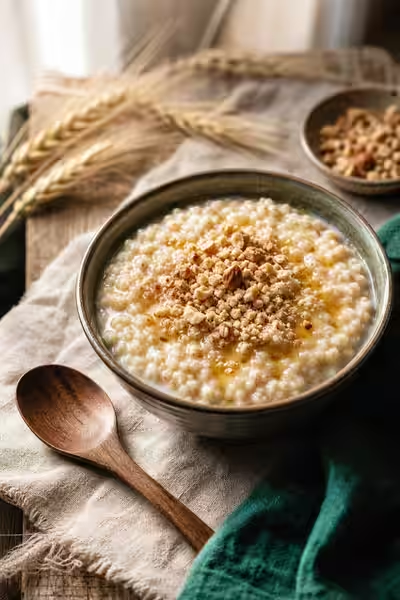
Talbinah is the thin barley porridge that 'Aishah (may Allah be pleased with her) order…
Essential storage keeps the site working. Optional Google services stay off until you choose. Rejecting them does not limit access.
Privacy policy · Cookies & Google data use. Change choices in the footer anytime. Withdrawal may reload the page; save unsent form text first.
Your browser’s Global Privacy Control signal is enabled. Advertising remains off.
WELCOME TO
A LITTLE GUIDANCE, A CLICK AWAY
Explore our services, find a product, or get in touch with the team.
Chat on WhatsAppContinue with the team on WhatsApp↗The guide answers automatically. The admin team can also reply here; response times may vary.
Share your details once, then return to your saved chats.
Website guide active · Team replies may also appear here.
Saved for the admin team ·