 Featured
Remedy
Sidr Honey from Yemen
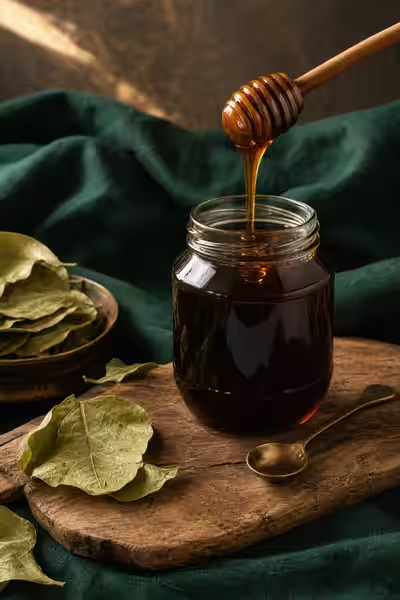
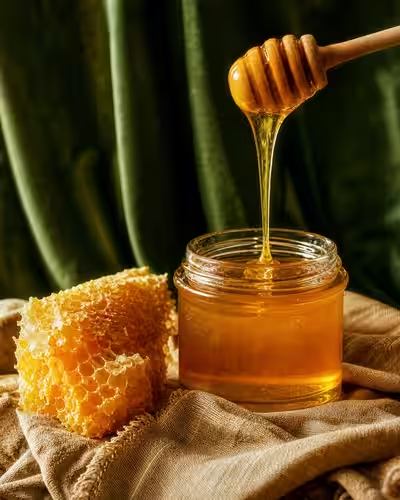
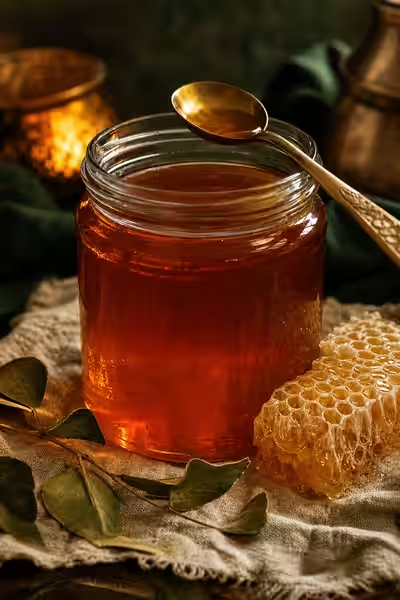
عسل السدرSidr honey comes from bees that feed on the flowers of the lote tree, and the finest is…
$58.00USD
Order
 1 / 3
1 / 3
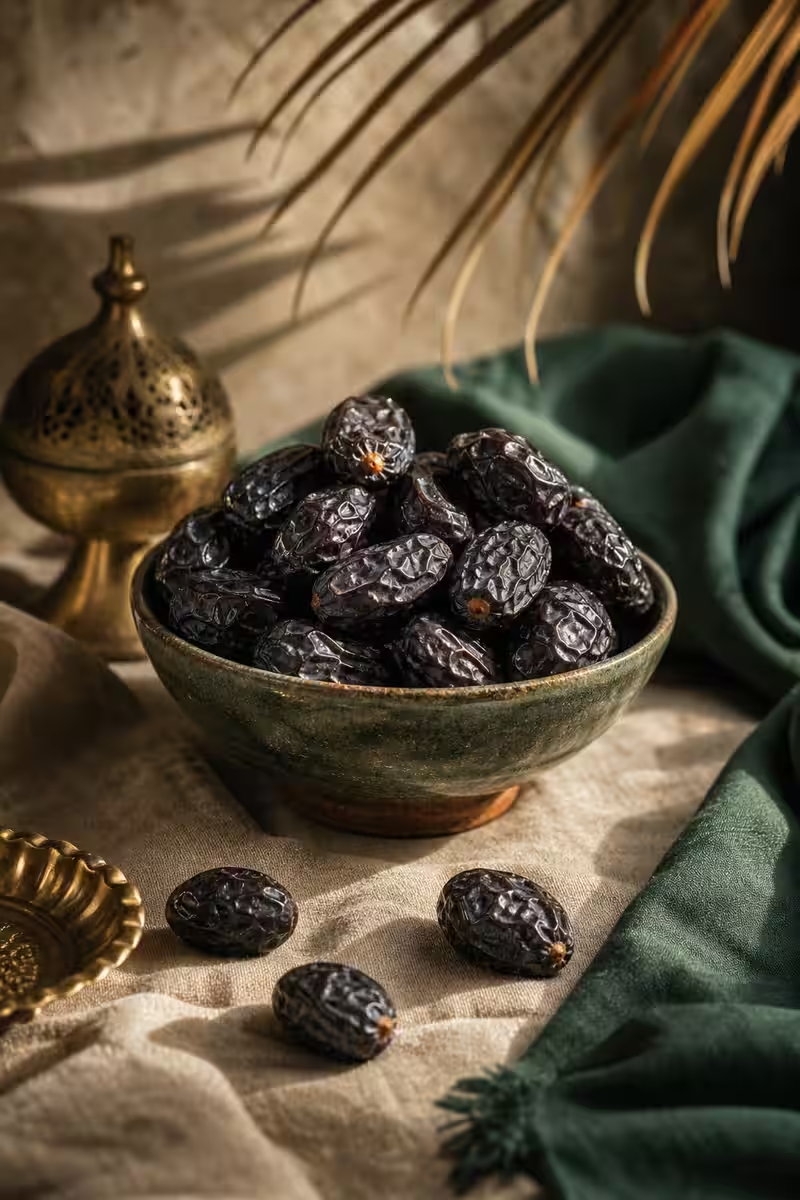
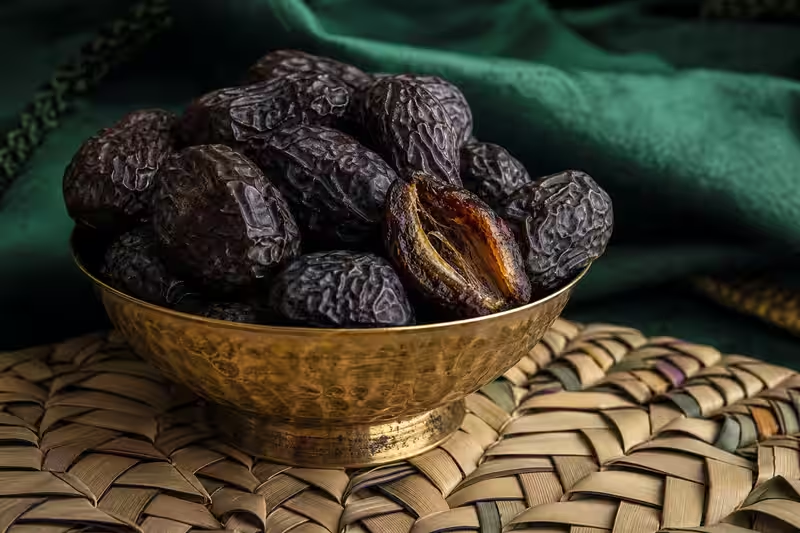
Ajwa are the dark, soft, finely wrinkled dates grown in Madinah — the variety the Prophet ﷺ named specifically when he spoke about protection from poison and magic. They are smaller than the common commercial dates, deep black-brown in colour, less sweet, and slightly drier in texture, with a flavour people describe as rounded rather than sugary.
The hadith is well known: whoever eats seven Ajwa dates in the morning will not be harmed by poison or magic that day. Muslims have acted on this for fourteen centuries, and families in Madinah still begin the day with them.
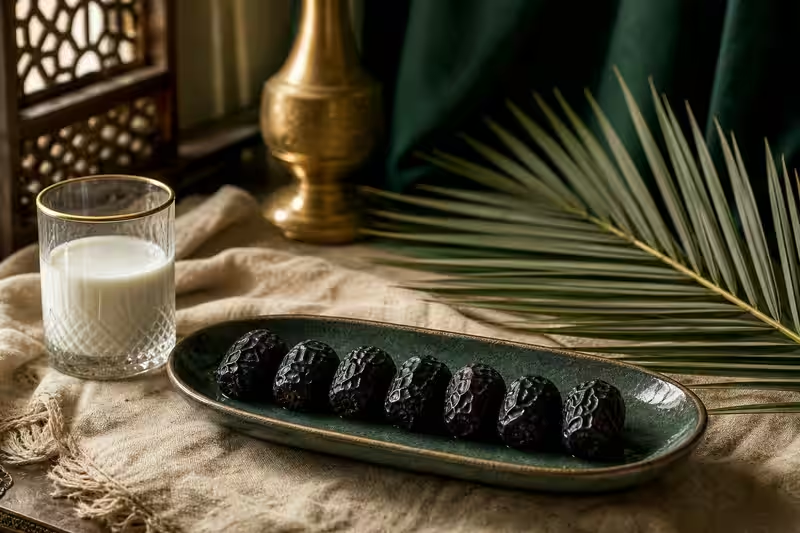
We supply genuine Ajwa from Madinah in a sealed food-grade pack. Keep them in a cool dry place, or refrigerate after opening to keep them soft. Eat seven in the morning as the sunnah describes, add them to milk or porridge, break your fast with them in Ramadan, or serve them to guests with Arabic coffee.
This listing is for one pack. Dates are a food, not a medicine: they support health, they do not replace treatment.
Before requesting an order, read ordering, delivery and returns and our privacy policy.
Delivery availability, charges and estimated timing are confirmed by the team before your order is accepted.
The team will confirm suitable packaging and delivery arrangements for your order.
Your order-request reference is displayed after submission. The team will confirm dispatch and any available tracking details with you.
Ajwa is the date of Madinah. Not a brand, not a marketing name — a specific variety grown in the soil around the city of the Prophet ﷺ, and the only date he singled out by name in a narration about protection. For Muslims that makes Ajwa something more than a sweet snack, and it is why people ask us for it by name from every part of the world.
Ajwa dates are small to medium, round rather than elongated, and dark — a deep black-brown with fine vertical wrinkles across the skin. The flesh is soft but not syrupy, and the sweetness is restrained compared to the very sugary commercial varieties such as Medjool or Khudri. People who grow up eating them describe the taste as rounded and slightly earthy, with a hint of toffee and a clean finish.
They are harvested from date palms in the Madinah region, particularly around al-Aliyah, the area the classical sources associate with the best Ajwa. Because the yield is lower than that of commercial varieties and the demand is enormous, genuine Ajwa carries a higher price and, unfortunately, attracts imitation. Cheap “Ajwa” sold in bulk is frequently a dark variety from elsewhere, or Ajwa mixed with other dates. Buying from a source you trust matters.
“Whoever eats seven Ajwa dates in the morning will not be harmed by any poison or magic on that day.” (Sahih al-Bukhari and Sahih Muslim, from Sa'd ibn Abi Waqqas)
In another wording in Muslim, the Prophet ﷺ said: “Whoever eats seven dates in the morning from what is between the two lava plains of Madinah…” — referring to the black volcanic fields on either side of the city. Some scholars understood the virtue to be specific to the Ajwa of Madinah; others held that the blessing extends to the dates of Madinah generally, and that Ajwa is the best of them. Either way, the practice the ummah inherited is simple: eat Ajwa dates in the morning, and do it consistently.
A few points the scholars make, so that people use this correctly:
The morning practice. The most common way: seven dates after Fajr, with water or milk. Many people prepare them the night before on a small plate so there is no excuse in the morning.
With milk. Dates soaked briefly in warm milk, or blended into it, is a traditional energy drink given to the recovering, to nursing mothers, and to people fasting. It is gentle on an empty stomach.
To break the fast. The Prophet ﷺ broke his fast with fresh dates, or dried dates, or water. Ajwa is what many families in Madinah reach for first in Ramadan.
Ground with other remedies. Ajwa is frequently combined with black seed, honey or talbinah in traditional practice. If you blend them, blend small amounts and keep the mixture sealed and dry.
With Arabic coffee. The bitterness of qahwa against the sweetness of the date is the classic hospitality pairing across the Arabian Peninsula. Serve three dates beside a small cup for guests.
In cooking. Chopped into porridge, oatmeal, rice, bread and ma'amoul-type fillings; or pitted and stuffed with almonds. Dates also replace sugar in many recipes — use roughly the same volume, chopped, and reduce other liquids slightly.
Dates are a whole food: natural sugars for quick energy, dietary fibre for the digestion, and meaningful amounts of potassium, magnesium, iron and B vitamins, plus polyphenol antioxidants. They are energy-dense — seven Ajwa dates are roughly a modest snack's worth of calories — so they suit active people, those recovering from illness, pregnant and nursing women, and anyone fasting. If you are managing diabetes, dates still raise blood sugar; speak to your doctor or dietitian about portion size rather than assuming a “natural” food is free of consequences.
Dates are also one of the foods that travel and store well, which is why they sustained desert communities for millennia and why they were carried on journeys. A sealed pack keeps for months; refrigerated, it keeps much longer.
Keep the pack sealed in a cool, dark, dry cupboard — heat and humidity are what ruin dates. After opening, press the air out and close it, or move the dates to an airtight container. In a hot climate, refrigerate them; they will keep for many months and stay soft. If you refrigerate, let the portion you are about to eat come to room temperature for ten minutes, because cold dates taste less sweet. Dates can be frozen for long storage with almost no loss of quality — freeze them in portions so you are not thawing and refreezing the whole pack.
If dates develop small white crystals on the skin, that is usually sugar migration, not mould, and they are still safe to eat. Actual mould — fuzzy, green or white patches with a sour smell — means the pack got wet; discard it.
Dates are food. They are excellent food, and the sunnah of eating them is real, but they are not a treatment for a diagnosed illness and they do not replace medicine. If you have been told your potassium is high, if you are managing blood sugar, or if you have swallowing difficulties (dates are sticky and can be a choking risk for small children and frail elderly people — remove the pit and chop them), speak to your doctor first.
Also be careful of anyone who sells dates, or any food, as a guaranteed cure for magic, epilepsy, infertility or cancer. The protection mentioned in the hadith is from Allah and it is tied to faith and consistency, not to a product you buy. We sell good dates honestly; we do not sell miracles.
Ramadan. The month when consumption rises most sharply. Keep a small dish of pitted Ajwa beside the prayer mat for iftar and another on the table for suhur, so that the first thing that enters the body after a day of fasting is a date and water, exactly as the sunnah describes.
Hajj and Umrah season. Families travelling to Madinah traditionally bring Ajwa home for relatives, which is why the demand outstrips supply every year and why the price moves. If you are travelling, buy from a shop attached to a known supplier rather than from an open street sack.
Winter and illness. Dates with warm milk, or dates ground with black seed and honey, are the household staples of the cold months across the Muslim world — gentle, energy-dense and easy on a sore throat.
Every day. The morning seven. The value of the practice is in its ordinariness: it takes thirty seconds, costs little, and ties the start of the day to a words-of-the-Prophet ﷺ intention.
Dates have been studied for their fibre, polyphenol and mineral content, and there is published research on date consumption in late pregnancy and on the antioxidant capacity of different varieties. That research is interesting and it supports eating dates as a good whole food. It does not, however, prove that dates treat any specific disease, and no honest seller should claim that they do. The reason a Muslim eats Ajwa in the morning is the hadith and trust in Allah — the nutrition is a bonus, not the argument. If someone is selling you dates on the strength of a laboratory claim, be sceptical; if they are selling you genuine Ajwa at a fair price, that is enough.
Are these from Madinah? Yes — genuine Ajwa from the Madinah region, sealed for transport.
How many dates are in a pack? Count varies with size; we sell by weight, which is the honest way. Ask us the current pack weight and we will tell you exactly.
Can children eat them? Yes, and they are a far better snack than sweets. Remove or check the pit for young children and chop the dates for toddlers.
Do I have to eat exactly seven? Seven is what the hadith mentions. If you cannot, eat what you can — the practice is about consistency and trust in Allah, not about hitting a number under pressure.
Are they suitable in pregnancy? Dates are widely eaten in pregnancy and are commonly recommended in the last weeks as a normal food. Speak to your midwife about your own situation.
Should they be soft or dry? Soft and pliable. Rock-hard dates are old or were dried too aggressively.
There is something quietly beautiful about the fact that the Prophet ﷺ attached a promise of protection to a common food that poor people could also afford. Not a rare stone, not an amulet you had to be given by a special person — a date, eaten in the morning, in your own home, with your own intention. Start the day with it, say bismillah, and go about your work trusting that the One who created the date is the One who protects you.
May Allah put barakah in your food, protect you and your household, and accept the sunnah you are reviving by eating them. Amin.
You may also need
Featured
Sidr honey comes from bees that feed on the flowers of the lote tree, and the finest is…
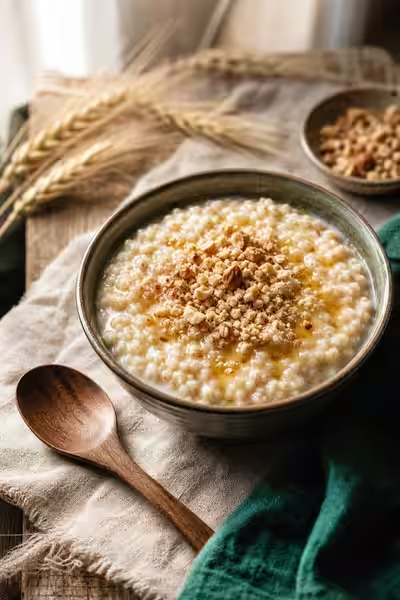
Talbinah is the thin barley porridge that 'Aishah (may Allah be pleased with her) order…
Essential storage keeps the site working. Optional Google services stay off until you choose. Rejecting them does not limit access.
Privacy policy · Cookies & Google data use. Change choices in the footer anytime. Withdrawal may reload the page; save unsent form text first.
Your browser’s Global Privacy Control signal is enabled. Advertising remains off.
WELCOME TO
A LITTLE GUIDANCE, A CLICK AWAY
Explore our services, find a product, or get in touch with the team.
Chat on WhatsAppContinue with the team on WhatsApp↗The guide answers automatically. The admin team can also reply here; response times may vary.
Share your details once, then return to your saved chats.
Website guide active · Team replies may also appear here.
Saved for the admin team ·